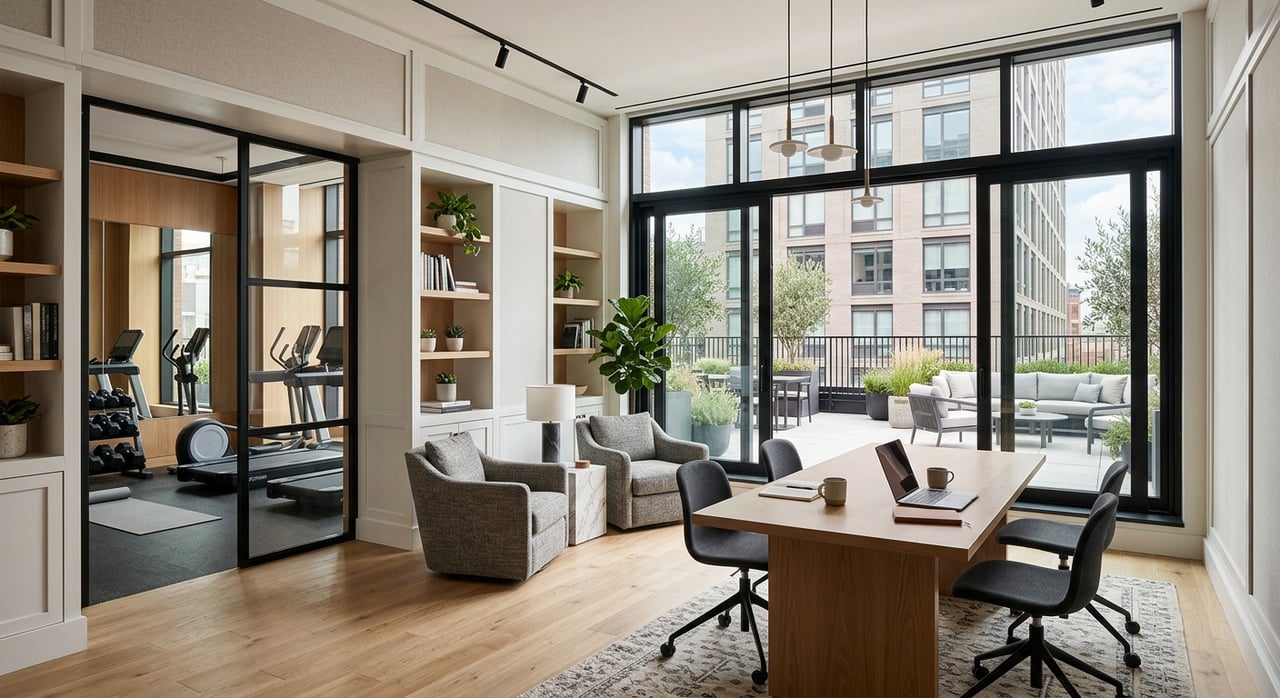
Picture this: you fall in love with a Chicago condo because of the rooftop views, only to realize later that the amenities you actually use most are the package room, the fitness center, and the lobby staff who make daily life easier. If you are buying, selling, or comparing condos in Chicago, amenities are not just flashy extras. They affect your routine, your monthly costs, and often your resale appeal. Here is how to think about Chicago condo amenities in a practical, everyday way. Let’s dive in.
Why amenities matter in Chicago
In Chicago, condo living is often about balancing building convenience with city convenience. Many buyers care not only about what is inside the building, but also how the building fits into a walkable, transit-connected routine.
That makes amenities part of a bigger lifestyle equation. A great condo building can extend your living space, simplify errands, support remote work, and make hosting easier, but only if the features match how you actually live.
Chicago’s condo and townhome market also entered 2026 with softer momentum after late 2025. In December 2025, city condo and townhome prices were down nearly 4% year over year, closed sales dipped nearly 3%, inventory fell 29.2%, and days on market dropped by 3 days. In this kind of market, buyers and sellers tend to look more closely at amenity mix, monthly assessment, and reserve health as part of the full value story.
Everyday amenities buyers notice most
The newest Chicago high-rises have helped set the standard for what buyers now expect. Buildings such as The Reed, OneEleven, NEMA, and 1000M market combinations of concierge service, package rooms, co-working areas, rooftop terraces, pools, fitness spaces, and resident lounges.
Even so, not every amenity carries equal day-to-day value. The most useful ones are often the features that save time, reduce friction, or give you flexible space beyond your unit.
Fitness centers support routine
A well-designed fitness center can do more than check a box. It can make it easier to stay consistent with your schedule, especially during Chicago winters or on busy workdays.
Across multifamily properties, equipment and furniture rank as the most important fitness-center feature. In Chicago examples, The Reed includes dedicated HIIT and yoga spaces, while 1000M promotes a two-floor health club and daily fitness classes. For many buyers, that means the building gym becomes a realistic replacement for a separate membership.
Co-working space adds flexibility
Remote and hybrid work changed what buyers look for in condo buildings. Shared workspace interest rose from 35% to 48% in a 2024 survey cycle, and 86% of renters said high-speed internet was very important or essential.
In practical terms, co-working space gives you another place to take calls, focus between meetings, or work outside your unit without leaving the building. Chicago buildings like The Reed, OneEleven, and NEMA all highlight flexible work areas, which shows how central this feature has become.
Rooftops and terraces expand living space
In Chicago, outdoor space can feel especially valuable because it is limited in many urban homes. Rooftop decks and terraces often serve as extra living rooms, dining areas, or places to unwind after work.
The Reed, for example, includes a 15,000-square-foot outdoor deck with a pool, cabanas, fire pits, kitchens, and dining areas. Other buildings market rooftop terraces, pool decks, and garden-style outdoor spaces. For some owners, these areas are not just nice to have. They are where they entertain, relax, and enjoy the skyline without maintaining private outdoor space.
Concierge and package rooms reduce hassle
Some amenities are less glamorous but more useful than they first appear. Concierge service and secure package rooms can improve daily life in simple, meaningful ways.
Security is the top priority in package rooms according to multifamily survey data. In buildings that pair 24-hour concierge service with organized mail and package handling, residents often get fewer missed deliveries and more controlled guest or service access. If you order frequently or travel often, this kind of setup can matter more than a flashy lounge.
Extra features may fit your lifestyle
Chicago high-rises increasingly include bike storage, EV charging, pet amenities, and resident events. These can be helpful, but their value depends on whether you will actually use them.
For example, EV charging may be a major plus if you drive an electric vehicle. Bike storage matters more if you ride regularly. Resident programming can help some people feel more connected to the building, while others may never attend an event. The key is to separate features that look impressive on a tour from those that improve your real routine.
How amenities affect HOA fees
Amenities are never free, even when they feel seamless. In most condo buildings, the cost of maintaining shared spaces, staffing services, utilities, cleaning, repairs, and long-term replacements is reflected in the monthly HOA assessment.
That is why it helps to think beyond the purchase price. Your true monthly cost usually includes your mortgage, property taxes, insurance, and HOA dues, so the right comparison is total monthly carry, not just the list price.
Richer amenity packages usually cost more
Association fees often vary based on location, building age and condition, property value, and the amenity package itself. A building with a pool, full-time staff, large fitness center, and multiple resident spaces will usually cost more to operate than a simpler building with fewer shared features.
Chicago association guidance notes that budgets commonly fund reserve contributions, utilities, maintenance and repairs, insurance, management, legal and administrative costs, landscaping, and contingency. In short, more amenities usually mean more ongoing expenses.
Reserve strength matters just as much
A low monthly assessment may look attractive at first, but it does not always mean a building is financially strong. Illinois law requires adopted association budgets to provide reasonable reserves for capital expenditures and deferred maintenance, while directing boards to consider repair and replacement costs, useful life, reserve studies, owner impact, market value, and financing options.
For buyers, this matters because underfunded reserves can increase the risk of future financial strain. A building with well-maintained amenities and a sustainable reserve plan may offer better long-term predictability than one with low dues but weak financial planning.
Special assessments can change the picture
Illinois law also allows special assessments for common expenses that are not included in the regular budget. That means buyers should not look only at current dues. You also want to know whether major building work is coming and how prepared the association is to pay for it.
When amenities age, replacement costs can be significant. Elevators, pools, roofs, mechanical systems, and lobby renovations all require planning. The most attractive building is not always the one with the longest amenity list. It is often the one that can maintain those features responsibly.
How to compare Chicago condo buildings
If you are comparing condo options in Chicago, a simple framework can help. Instead of asking which building has the most amenities, ask which building offers the best balance of convenience, monthly cost, and future resale appeal.
That shift can make your decision clearer and more grounded.
Start with your weekly habits
Think about what you would use at least once or twice a week. A fitness center, secure package room, or co-working lounge may deliver more value to you than a theater room or golf simulator you rarely visit.
Broadly useful amenities often age better because more buyers can picture themselves using them. That can help support resale appeal down the line, especially when the spaces are well maintained and easy for the building to budget.
Compare the building with the block
In Chicago, the building is only part of the lifestyle. Walkability and transit access still matter a great deal to many buyers.
According to a 2023 survey, 78% of respondents said they would pay more to live in a walkable community, 36% said nearby transit was very important, and about half preferred a walkable community and shorter commute even if that meant an attached home or smaller yard. So when you compare condo buildings, look at the neighborhood convenience alongside the in-building features.
Review the financial side carefully
A polished lobby and rooftop deck tell only part of the story. You also want to understand what is included in the monthly assessment, whether special assessments are pending, and how healthy the reserve fund is.
For many Chicago condo buyers, this is where an experienced agent adds value. Building-level details can affect affordability, negotiation strategy, and long-term satisfaction just as much as the unit itself.
What this means for sellers
If you are selling a Chicago condo, amenities should be framed as part of the everyday living experience, not just a list of perks. Buyers respond best when they understand how the building supports work, wellness, convenience, and entertaining.
At the same time, savvy buyers will look past the brochure language. They will weigh the monthly assessment, ask about reserves, and compare your building’s value against nearby options. Strong positioning comes from presenting both the lifestyle benefits and the financial context clearly.
That is especially true in a market where buyers are paying close attention to what they get for the money. The right pricing and marketing strategy can help show why your building’s amenity mix stands out in a credible, useful way.
If you are weighing a downtown condo purchase or preparing to sell, working with Kui Hu can help you compare buildings, understand the cost story behind amenities, and position your property with clarity and confidence.
FAQs
How do condo amenities affect everyday life in Chicago?
- Condo amenities can make daily life easier by adding fitness space, package security, work areas, outdoor gathering space, and service support that extend how you live beyond your unit.
How do Chicago condo amenities affect HOA fees?
- Amenities usually increase operating and long-term maintenance costs, so buildings with more staff, shared spaces, and service features often have higher monthly assessments.
What Chicago condo amenities are often most useful?
- The most practical amenities are often fitness centers, secure package rooms, co-working areas, concierge service, and outdoor spaces that residents use regularly.
Why do reserves matter in a Chicago condo building?
- Reserve funds help associations plan for repairs and replacement of common elements, which can reduce the likelihood of unexpected financial pressure or repeated special assessments.
How should you compare condo buildings in Chicago?
- Compare buildings by looking at how often you would use the amenities, the total monthly carrying cost, the reserve health, and how the building fits with neighborhood walkability and transit access.
What should Chicago condo sellers highlight about amenities?
- Sellers should explain how amenities improve day-to-day living while also being prepared to address monthly assessments, reserve planning, and the building’s overall value proposition.
